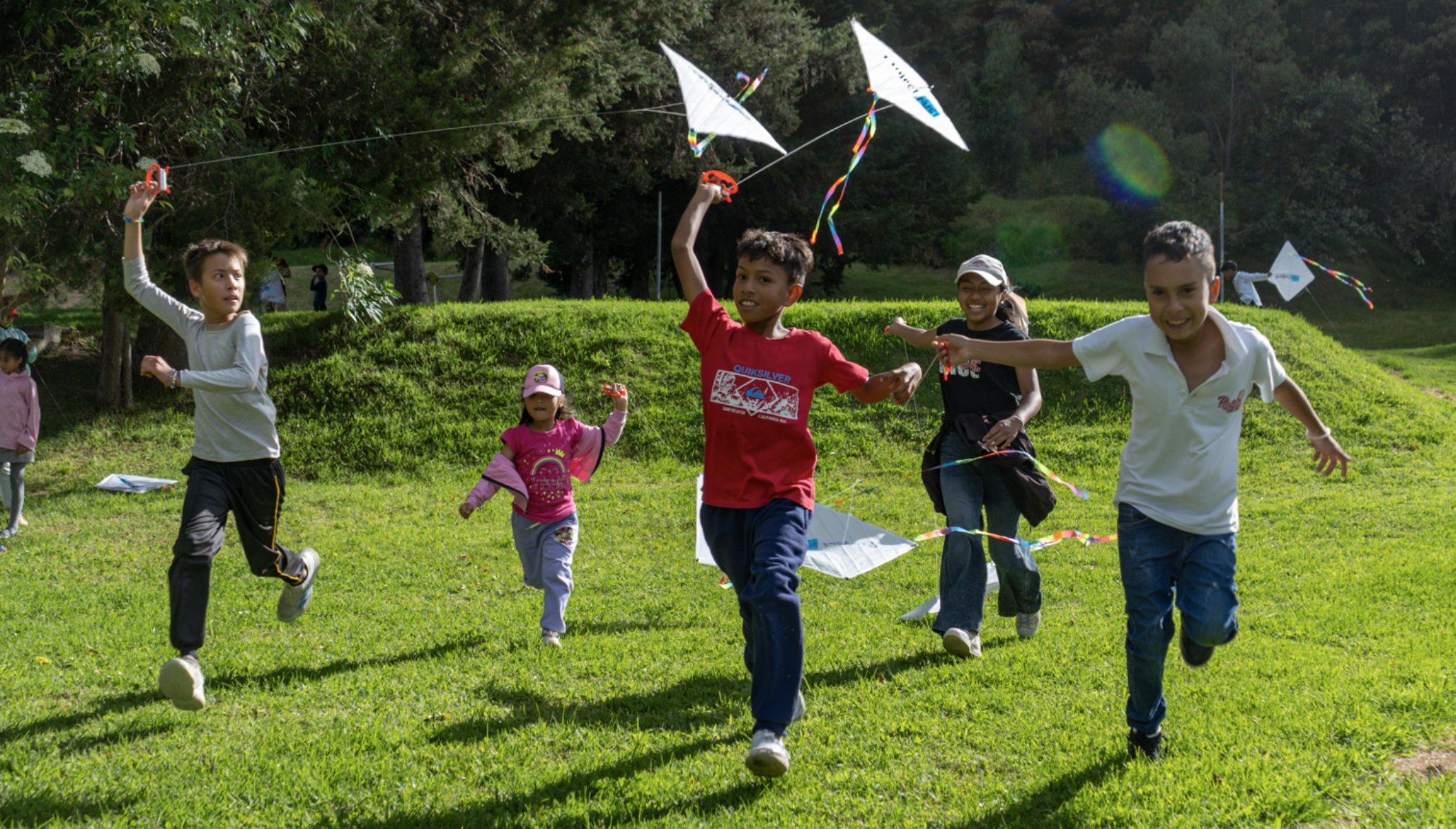
Into the Wind
“What a kite knows about a child who’s had a hard start — and the same wind that keeps knocking it down being the only thing that will ever lift it.”
We tried to fly a kite with our kid on a day that seemed perfect for it. It was not.
The kite lifted a few feet, tipped sideways, and drove itself into the grass. We ran again. It dragged behind us like a dropped coat, caught for a second, then flipped and crashed. Our kid wanted to quit around the fourth try. Somewhere around the sixth, so did we. A kite lying in the grass is the least impressive object on earth. It's hard to believe the thing is built to fly at all.
Here's what took me too long to understand. The crashes weren't the kite failing to fly. They were the kite learning how.
You don't get it right on the first run, or usually the tenth. You adjust the angle. You wait for the gust instead of forcing it. You let it fall, pick it up, and try the run again with your feet a little smarter than before. Every nosedive teaches your hands something the last one didn't. Nobody has ever flown a kite who wasn't first willing to watch it crash a dozen times and reach down and lift it up again.
Children are like this, and the ones who've had the hardest starts most of all. We would love for them to get it right the first time — to feel safe on the first try, to trust on the first offer, to believe a kind word about themselves the first time they hear it. They won't. Healing runs the way kite-flying runs: fall, get up, adjust, run again. What looks like failure is the practice. The getting back up is itself the growth.
But here's what the kite taught me that the grit stories leave out: no child does the getting-up alone. There's always a hand that reaches down, brushes off the grass, and hands the kite back for one more run. The strength isn't summoned out of nowhere; it grows over time and is impacted greatly by the presence of stable mentors.
The part everyone gets backward
Then there's the wind.
If you love a kite, your instinct is to wait for a gentle day. Protect it. Keep it clear of the strong gusts that flipped it before. But a calm day is exactly the day a kite won't fly. It needs the very thing that looks like its enemy. A kite doesn't rise in spite of the wind. It rises by leaning into it. Angle it right, and the same force that slammed it into the ground becomes the only reason it can climb.
And here's the strange part: you never actually see the wind. You see what it does. You feel it pull against the line. You learn to trust it's there before you have any proof, and you lean the kite into it anyway. Flying a kite is a small act of faith in something you can't see.
We want to build a windless life for our children. It's a loving instinct, and it doesn't work. You can't hand a child a childhood with no wind in it, and if you could, you'd be taking away the very thing their strength grows against. The goal was never to still the air. It's to help a child lean into it and rise — held steady while they learn how.
The string
Which brings us to the part that surprised me most.
Watch a kite climb, and the string looks like the one thing holding it back. The tether. The limit. The reason it can't go higher. So you might think the kindest thing you could do is cut it. Set it free. Let it really fly.
Cut the string and the kite doesn't soar. It tumbles. With no tension on the line, there's nothing for the wind to push against, and the whole thing folds and drops out of the sky. The string isn't what holds a kite down. The string is the only reason it's up there at all.
A rising child is one who is held steady. Somebody has to be standing on the ground with the line in their hands, feeling the tug, letting out slack when it's ready for more, keeping just enough tension that the wind has something to lift against. That person isn't flying the kite. They'd ruin it if they tried. They're doing something harder and far less visible: holding on, and paying attention, for as long as it takes.
And at first the child holds none of it himself. The steadiness travels down the line from the person on the ground — their calm, their patience, their stubborn certainty that this will work. A child borrows a steady adult's calm a thousand times before he can make his own. That's how the strength gets built. One steady person, holding the line long enough for a kid to learn the feel of the wind — that's the whole thing. And it's almost always one person. It rarely takes more.
Connection is the classroom. Cut the line in the name of freedom, and you don't get a free child. You get a falling one.
The craziest kite I ever saw
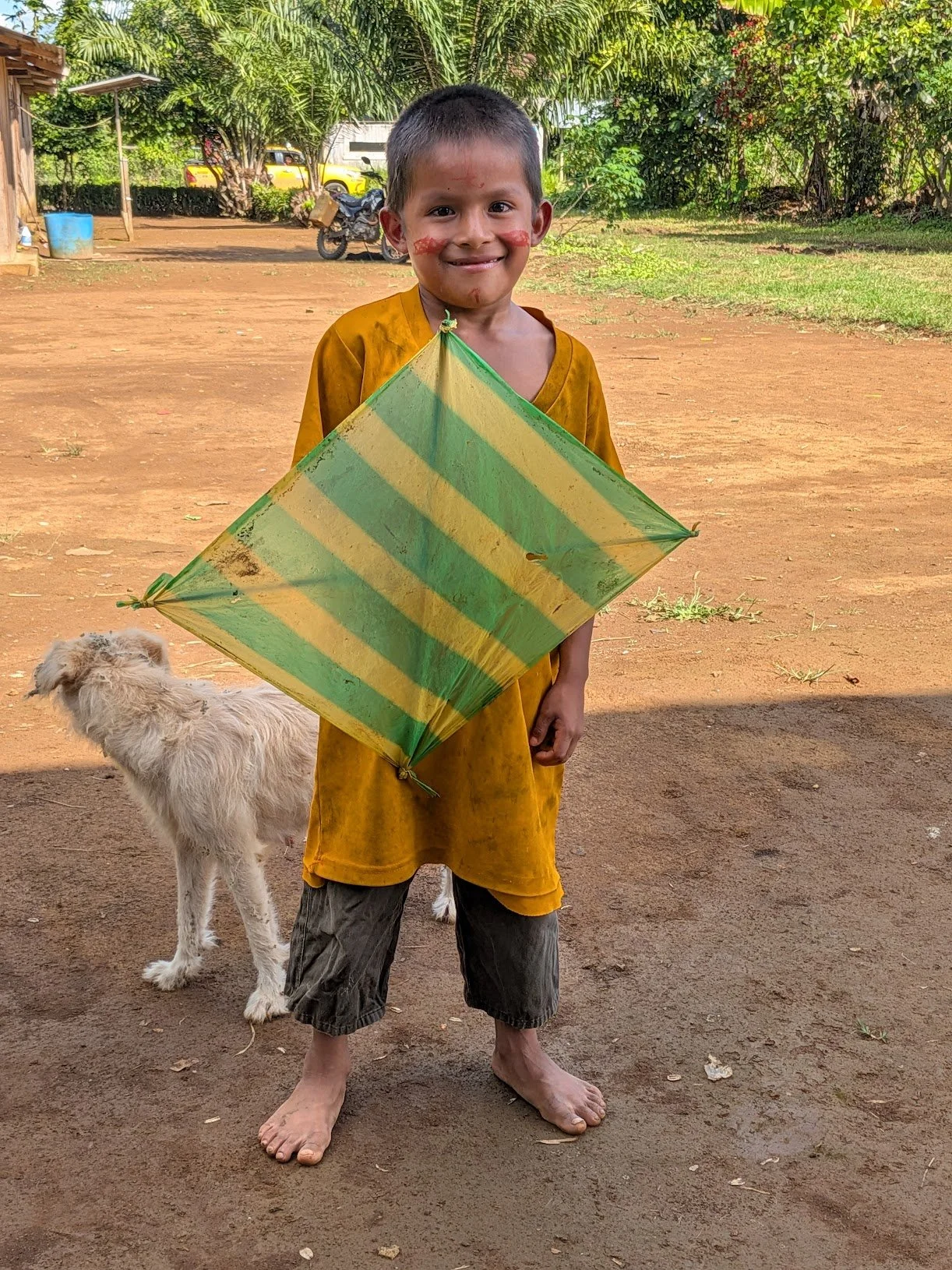
The other day, while working deep in the Ecuadorian Amazon, our team found the craziest kite. A little boy had made his own — four sticks and a grocery bag — and he was flying it, beaming, prouder of it than any kid with a store-bought one.
He already knew the secret the fancy kites forget. It was never about what you start with. It's the wind, the line, and someone who won't let go of the other end.
And no one is born knowing any of this. Someone taught you. Stood behind you, probably, put a hand over your hand on the line, ran alongside you, said now, and let go at exactly the right second. If a kite ever climbed for you, there's a decent chance you've since stood behind someone smaller and done the same. That's the whole thing, handed down: not flying it for them, but teaching their hands what yours finally learned, and then holding the line while they find the wind.
Why our logo is a kite
We're not in the business of stilling the wind, and we're not trying to fly anyone's kite for them. The children are the ones who fly. The people who love them — the parents, the pastors, the neighbors and teachers already on the ground — are the ones holding the line. Our work is to stand with the people holding the line and help their hands learn what the wind is for.
And every so often you get to look up. The kite that kept crashing in the grass is a speck of color now, steady against a moving sky, pulling gently on a line held by someone who stayed. Same kite. Same wind. It just found the angle.
That's the distance between surviving and thriving. And it is a wonder every single time.