
One Guatemalan seminary student. 400 pastors trained. That's multiplication.
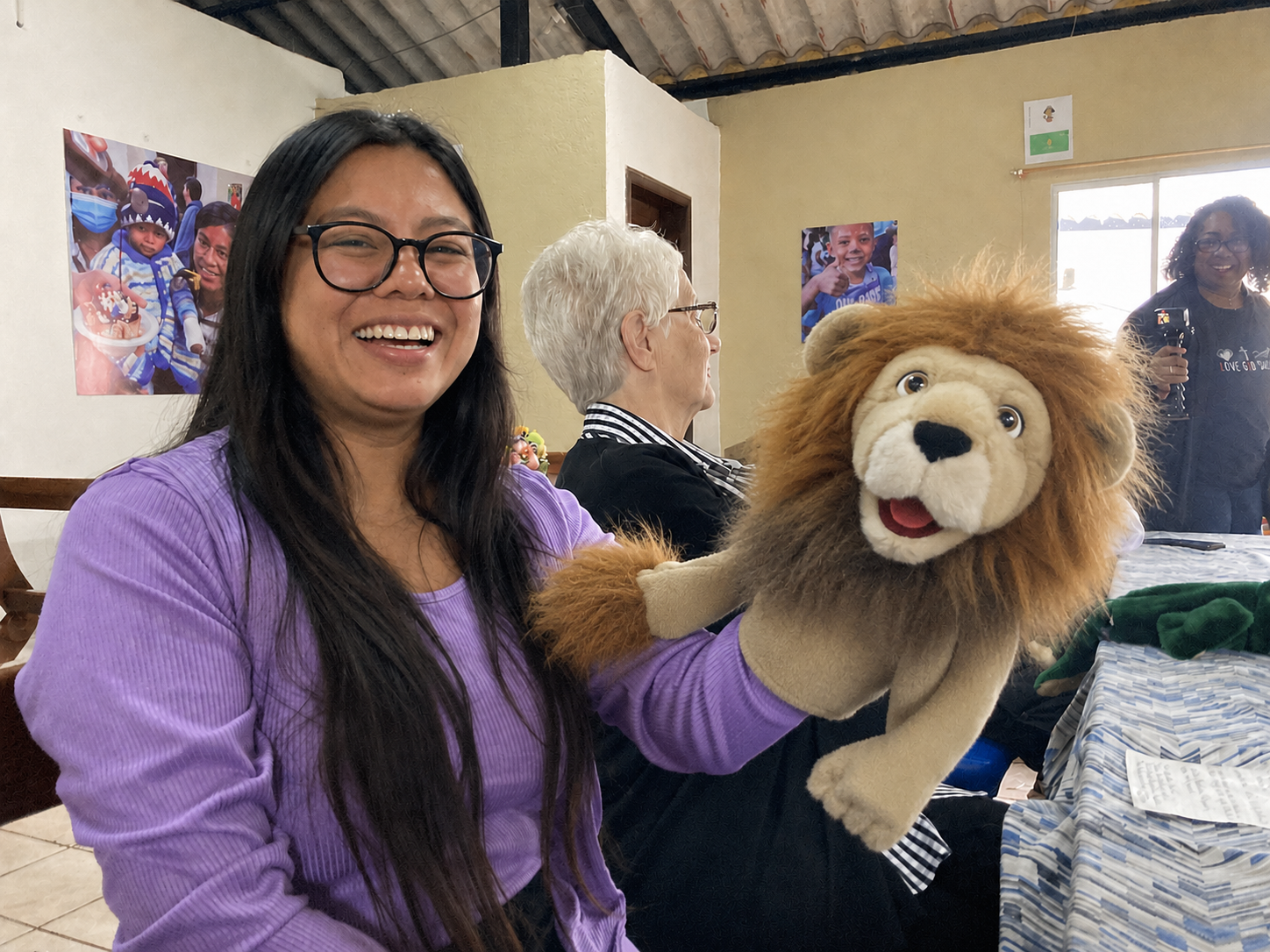
“In 2023, we funded a $40 monthly stipend for a young woman studying pastoral theology in Quito. Three years later, she’s training 400 pastors in Guatemala — and helping plant a Kids Club in Senegal.”
Her name is Mildred Rivas. Everyone calls her Mili.
Before any of this, Mili wasn't sure what came next. She'd worked with children before — and burned out. She was ready for something different, though she didn't know what.
Then she had a dream. She was studying somewhere — she didn't know what — but the place had brick walls. She kept her heart open. She told a pastor friend, who saw the dream as direction and sent her to the Pentecostal Bible Seminary of Guatemala. Her grades won her a scholarship there.
That's where Bani found her.
The director of education for the Church of God in Guatemala, Bani Calderon, suggested she go and study at the denomination’s seminary in Quito. He already knew M25 co-founder Bobby and had heard about our work. He brought Mili to our campus, introduced her to our team, and encouraged her to intern with us.
She hesitated. Children's ministry was the thing she'd just burned out on. She said yes anyway.
Then she met our kids in Quito.
For a year, Mili interned with our Kids Club team at our Agua Viva campus — practicing trauma-informed care alongside our senior staff and learning how to help children feel seen, safe, and loved. In July 2024, she graduated with a degree in Pastoral Theology, the Medal of Excellence, and a master's scholarship from Lee University.
Then she went home.
Today she's back home in Guatemala, a children's minister at her own church. And a single $40-a-month stipend has multiplied into something none of us predicted: under her supervision now are 400 churches, roughly 8,000 Sunday school teachers and children's workers, reaching about 16,000 children — all trained in the same trauma-informed care she learned in Quito.
Last November, she traveled to Senegal with a Guatemalan missionary, where she helped plant a new Kids Club and Give Water project. The hand-painted banner hanging in that West African village carries our logo. But the work is hers.
This is what multiplication actually looks like.
◆ ◆ ◆
She didn't learn it in a classroom.
Six months before Mili graduated, the Agua Viva community lost a teenager to suicide.
While our senior staff led the family through their grief, Mili was there — supporting the surviving brother and his parents through the longest week of the year. She wasn't full-time staff yet. She was an intern — a seminary student still learning what trauma-informed care actually meant.
She learned it that week.
That's where leaders like Mili get formed. Not only in lectures. Not only in curriculum binders. But in rooms where an adult who has been trained to stay calm shows up, listens longer than is comfortable, and prays without rushing the pain.
By the time she graduated and returned to Guatemala, she knew our methodology and had already practiced it through the worst week of the year.
Money spent on equipping others is more than a program. It mobilizes the kind of person who can sit with unbearable emotions and still come back the next morning smiling and ready to help children feel seen, safe, and loved.
◆ ◆ ◆
Multiply the Mission funds the next Mili.
We've spent years building something that works: a trauma-informed, faith-rooted model of care that compounds. Scholarships become interns. Interns become practitioners. Practitioners become leaders who multiply the work across cities, countries, and continents.
But Mili is one. And we've outgrown the space where she was trained.
Right now, leaders from across Latin America are asking to come study with us — students with their own dreams, and their own “Banis” already watching for them. We don't have room for them. Multiply the Mission is how we make room.
“Let us rise up and build. — Nehemiah 2:18”
Multiply the Mission funds four things:
The International Training Center — new classrooms, dorms, and a larger chapel on our campus in Quito, where the next generation of ministers will learn and serve
Scholarships for the next generation of Milis
Training and mentorship that turns students into multipliers
The deployment infrastructure that takes the model from Quito to Guatemala, to Senegal, to wherever God sends it next
Every dollar invested here doesn't stop at one child or one home. It travels. It compounds. It becomes a network.
