
The first lesson at Agua Viva isn’t math. It’s a deep breath.
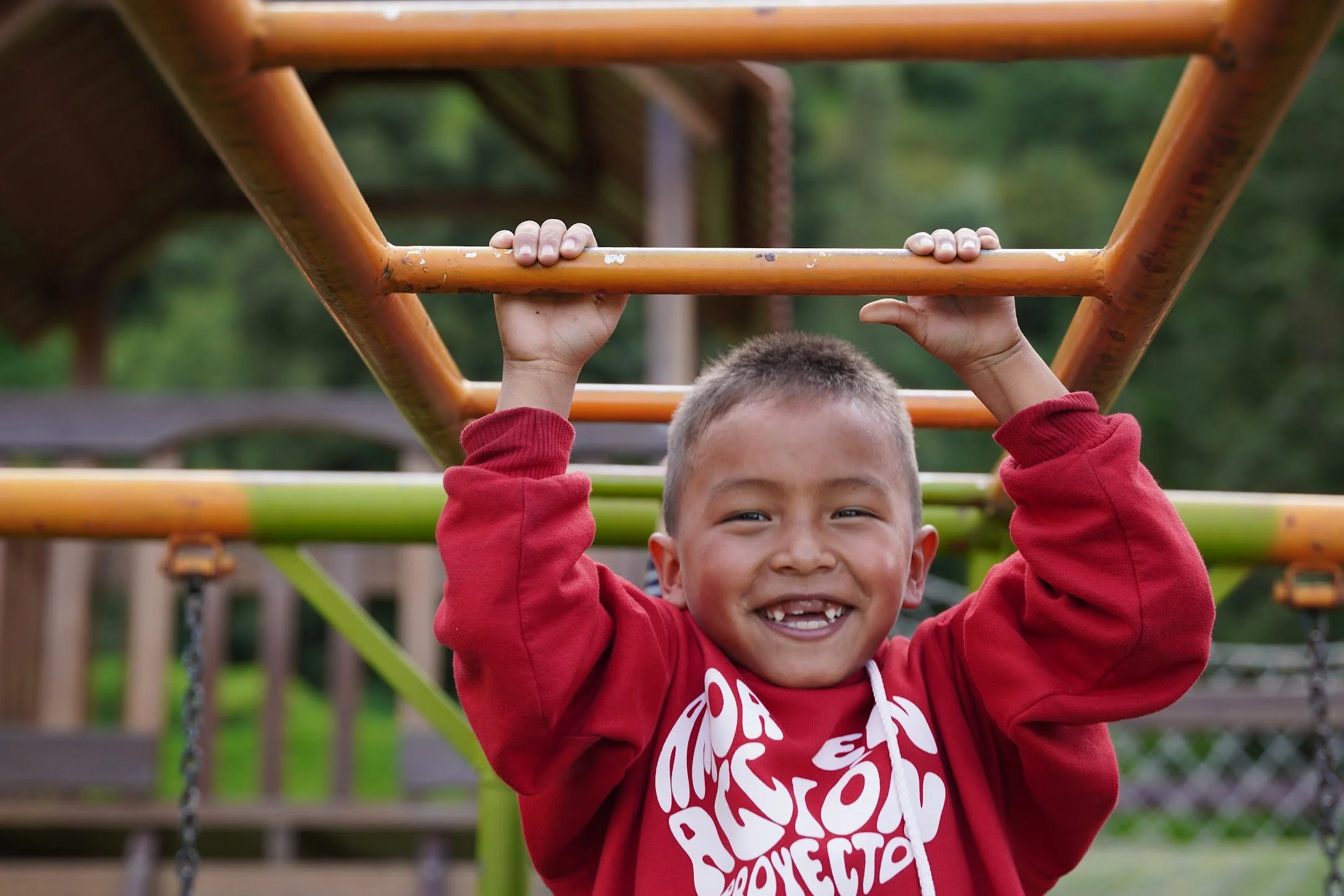
How a hillside campus outside Quito is putting whole-person care into practice — and steadily training a generation of Latin American leaders to do the same.
It is a little after three on a Tuesday afternoon, and a nine-year-old named María* is breathing into a squeeze ball the color of a ripe mango. She has tucked herself into a beanbag in the corner of the room the staff call the Peaceful Spot. Through the window behind her, eucalyptus trees on the slope below lean in the cold afternoon wind. At her desk, four feet away, the rest of her math problems wait, the pencil set down where she dropped it.
A minute ago, María’s hands were fists. Her voice was rising over a long-division problem that wasn’t going her way. A tutor in a soft pink sweater knelt down beside her and asked one patient question — ticket or words? — and María chose the ticket. She walked herself to the corner. She picked up the squeeze ball. She breathed.
In another minute, she will be back at her desk. No one will have raised a voice. No one will have been sent anywhere. There is no principal’s office on this campus, because there is no principal. There is, instead, a Tuesday afternoon shaped almost entirely around one idea: that a child cannot learn anything important if her body doesn’t feel safe.
This is the daily rhythm at Agua Viva, the 2.5-acre campus that Project M:25 Missions runs at 9,500 feet on the outskirts of Ecuador’s capital. It is also a small, specific picture of something larger: a quiet shift in how some Christian ministries in Latin America are caring for children who have lived through hard things.
The framework on this campus is called the THRIVE Model™. On paper, it is a whole-person approach to ministry — a way of attending to a child’s physical, mental and emotional, relational, and spiritual health all at once, with trauma-informed care running like an undercurrent through every part. On the ground, in San Fernando, it looks like this: a beanbag in a corner. A choice between carrots and beans. A scarf with weight in its hem. A hand-drawn map on someone’s refrigerator.
A different first lesson
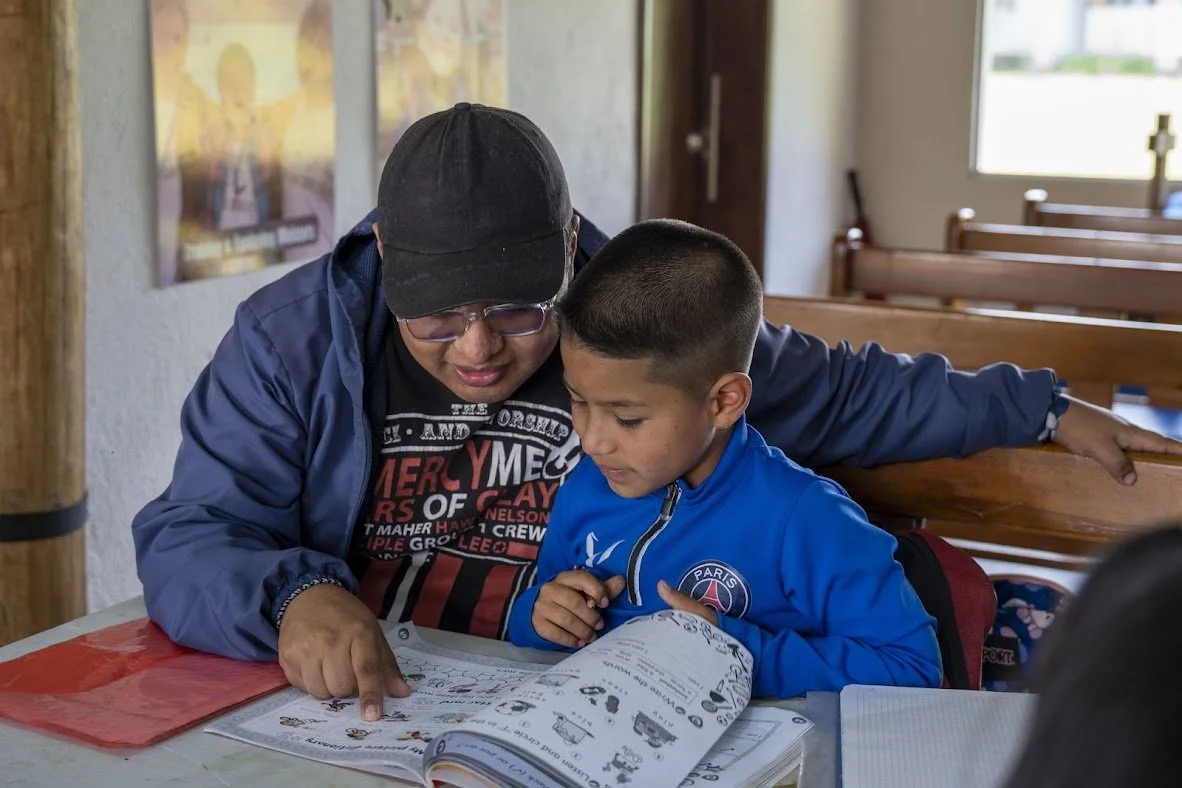
The campus sits in San Fernando, a neighborhood tucked into the Andean ridge where the air is thin and the late afternoon light goes long and gold. Children begin to arrive after school — some in uniforms, some in jackets two sizes too big, all of them ducking through the gate with the kind of ease that says they have done this many times.
At the gate, they are met at eye level by a tutor who knows their name. The greeting is short but specific. Hola, mija. ¿Playground or board games? A cup of cool water comes next.
The greeting is not incidental. It is the first lesson.
“Connection is the classroom” is how staff at Agua Viva describe it. The phrase, repeated throughout the day in Spanish and in English, is shorthand for a discipline that runs through every routine on the property: greet before you instruct. Regulate before you teach. Listen before you correct.
What it looks like in practice
In the kitchen, just past four, a pot of lentils is going on the stove, and the smell of frying onions and cumin moves out into the courtyard. The snack tray comes out: rice, sliced cucumber, a small bowl of beans, a pile of carrots. The goal, the staff will tell you, is for each child to eat a vegetable. The means is a small choice: zanahorias o frijoles? When one boy — six or seven, his hair still flattened in the back from a school nap — asks, “Both?” the staff laugh and say yes. The choice respects a child’s voice. The limit holds. The cumin keeps moving.
Across the courtyard, a tutor at the homework table is correcting a sharp tone with five words. Try again — with respect. The boy repeats his request, more gently this time. The tutor smiles, says gracias, and the moment is over. It has cost the table maybe ten seconds. The skill practiced was the right one, and it was practiced in a relationship that did not need to bend to teach it.
In a smaller room off the main courtyard, a sixteen-year-old has wrapped her shoulders in a scarf the color of dried lavender. She is sitting on a bench at the back of the room with her eyes closed. A tutor sits beside her and counts breaths in low Spanish — uno, dos, tres, cuatro, cinco — until the girl opens her eyes and says, in English this time, “Okay.” The bench, the scarf, the music, the count to five — none of these were imposed on her. She helped design them. Calma cuerpo, palabras claras, relación intacta, one of the tutors says afterward, almost to herself, as if reciting a verse. Calm body, clear words, intact relationship.
One framework. Four doors.
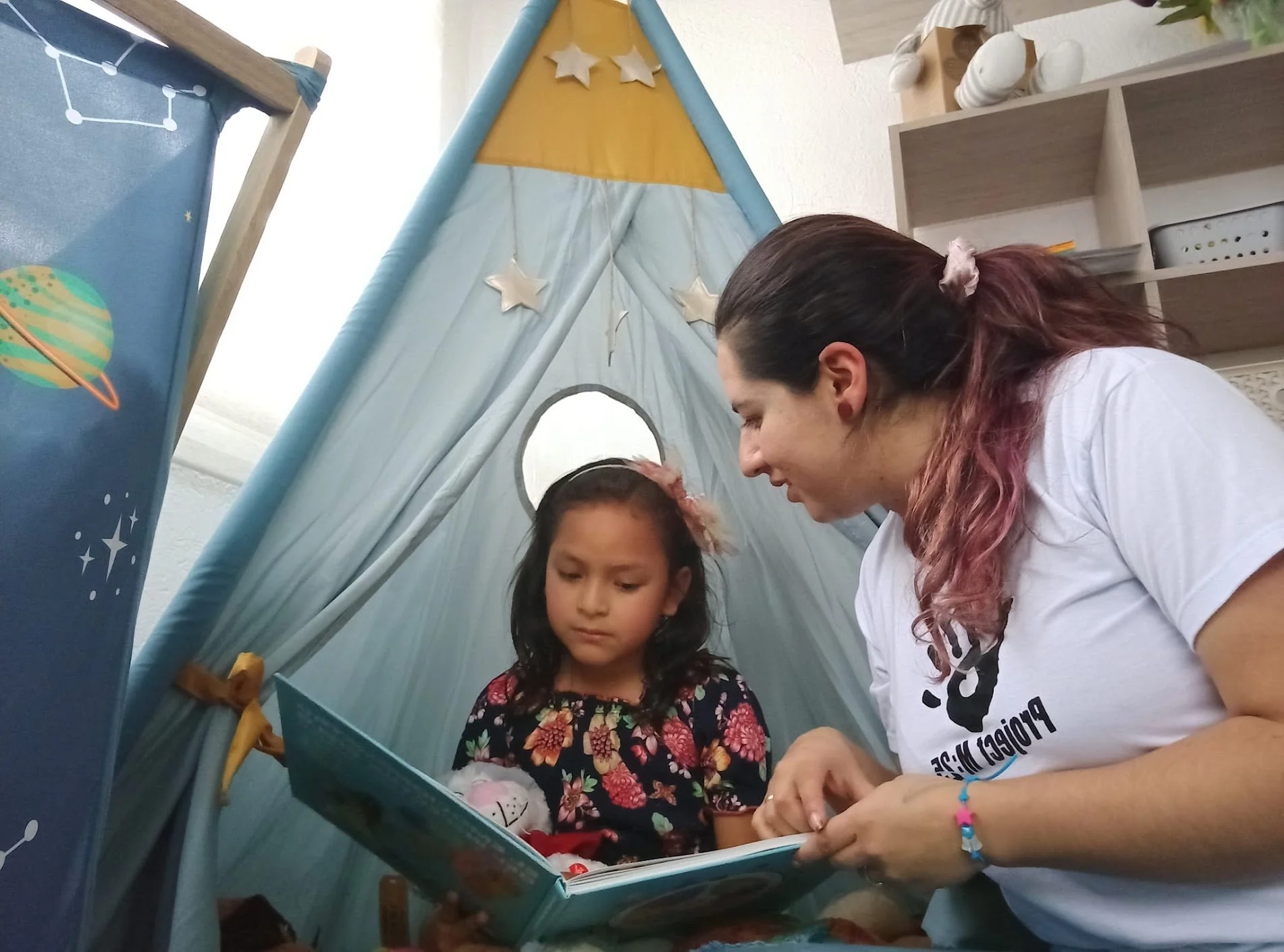
What the staff at Agua Viva are doing is not something they invented in isolation. The campus operates by a model the organization calls THRIVE — a whole-person approach to ministry that strengthens four connected parts of a child’s life at once: physical health (water, nutrition, sleep), mental and emotional health (regulation, coping, resilience), relational health (belonging, mentoring, repair), and spiritual health (prayer, purpose, healthy faith habits). Trauma-informed care isn't a separate program; it's the lens through which all four are experienced.
Most frameworks address one of those parts. THRIVE was built to address all four, in places where there is no clinical staff to lean on and no specialized facility to refer to — community-based, low-resource, usable by trained mentors and educators. Imperfect and human. Repeatable.
On the campus, THRIVE shows up as overlapping programs more than as a chart on a wall. Kids’ Club is the after-school program where María does her long division. Give Light is a mentoring track for adolescents — the teen with the lavender scarf attends. Precious Jewels is a small group of mothers, Rosa’s among them, who meet for what amounts to a weekly mix of trauma-aware parenting practice, friendship, and encouragement. Give Water, the household-level program that pairs in-home water filters with chaplaincy visits, is the clearest example of how the campus thinks about trust. Clean water is the obvious deliverable. The visit that comes with it — a chaplain at the kitchen table, asking how things are at home — is the long game.
The measuring stick for all of it is one question, repeated almost too often by staff: Does this help children feel seen, safe, and loved?
A practicum that became a training ground
Agua Viva began as a practicum. The original idea was modest: give Holistic Child Development students from Lee University’s offsite program in Quito a place to take classroom theory into a real ministry setting. The campus had a courtyard, a kitchen, a few classrooms, and a steady stream of children from the surrounding neighborhood.
Next, the practicum kept growing. Students didn’t just observe. They practiced — running the greetings, handling snack-time choices, and learning to walk a child to the Peaceful Spot without making a scene. Learning to draw a who-helps map.
More than 70 interns from across Latin America have now trained at Agua Viva. They have come from Ecuador, Colombia, Brazil, Guatemala, Mexico, and elsewhere, and they have gone home with the same set of habits.
“Learn, practice, return, replicate,” is how Project M:25 staff describe the cycle. It is a model the organization is now expanding through partner sites throughout Latin America.
The math is simple. The campus forms practitioners. The practitioners carry the work forward. Most of them will never appear in a fundraising email.
A Tuesday, ending
By 5 p.m., Kids’ Club is winding down. Backpacks are zipped. The smell of lentils has worked its way out of the kitchen and into the gravel of the courtyard, and from there back into memory. A staff member at the door says goodbye by name to each child as they leave — the same eye-level greeting that opened the afternoon, run in reverse.
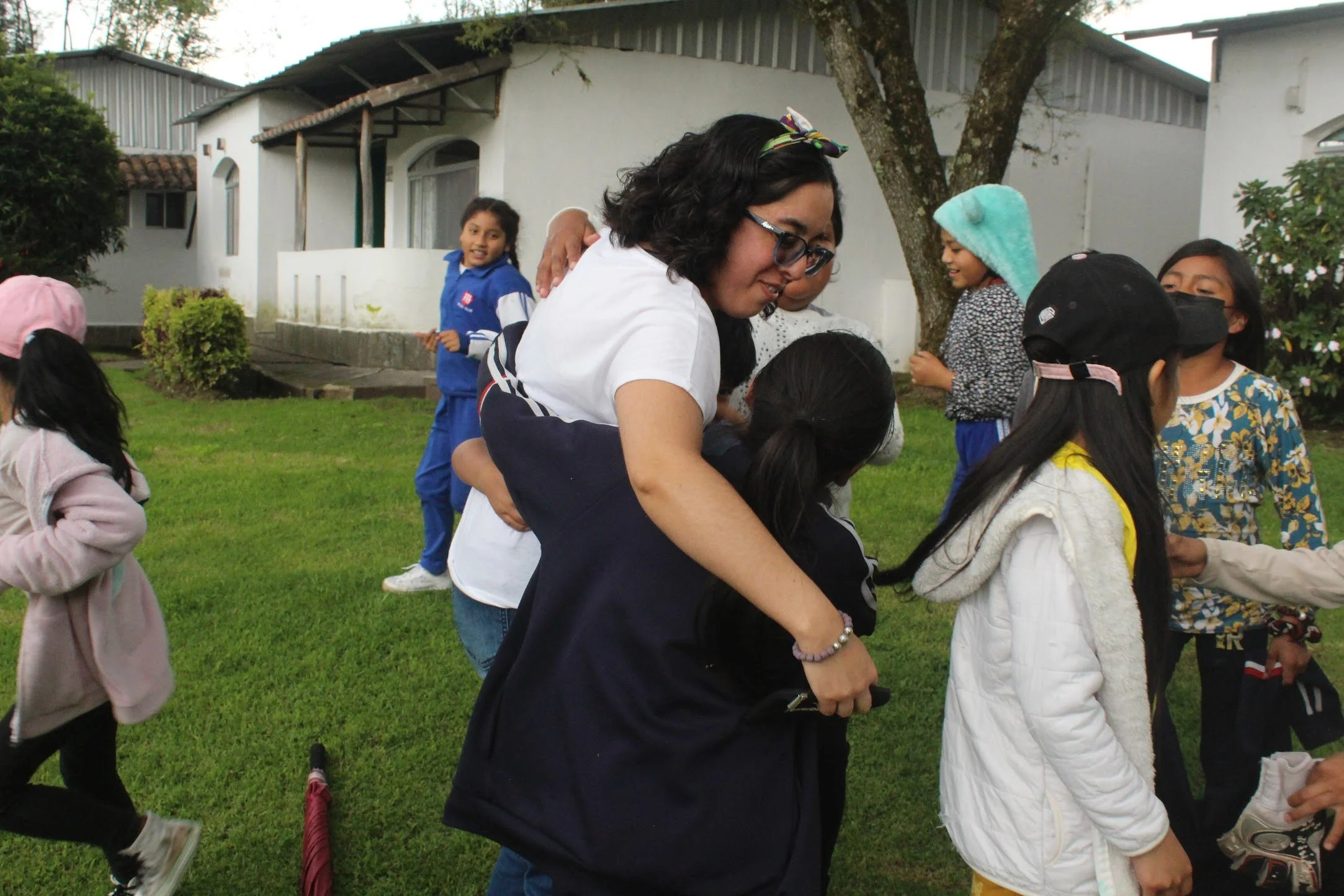
María is one of the last out. The squeeze ball is back in its basket, the long-division problems finished, her notebook closed and slid into a backpack two sizes too big. On the way to the gate, she stops to hug the tutor in the pink sweater — quick, light, the kind of hug a child gives when she has somewhere to go but wants to do that first.
The tutor crouches down to receive it. It takes about four seconds.
It is also, in a way, the whole curriculum.
